
Endorsements & "A" Ratings


About Assembly District 09
California Assembly District 9
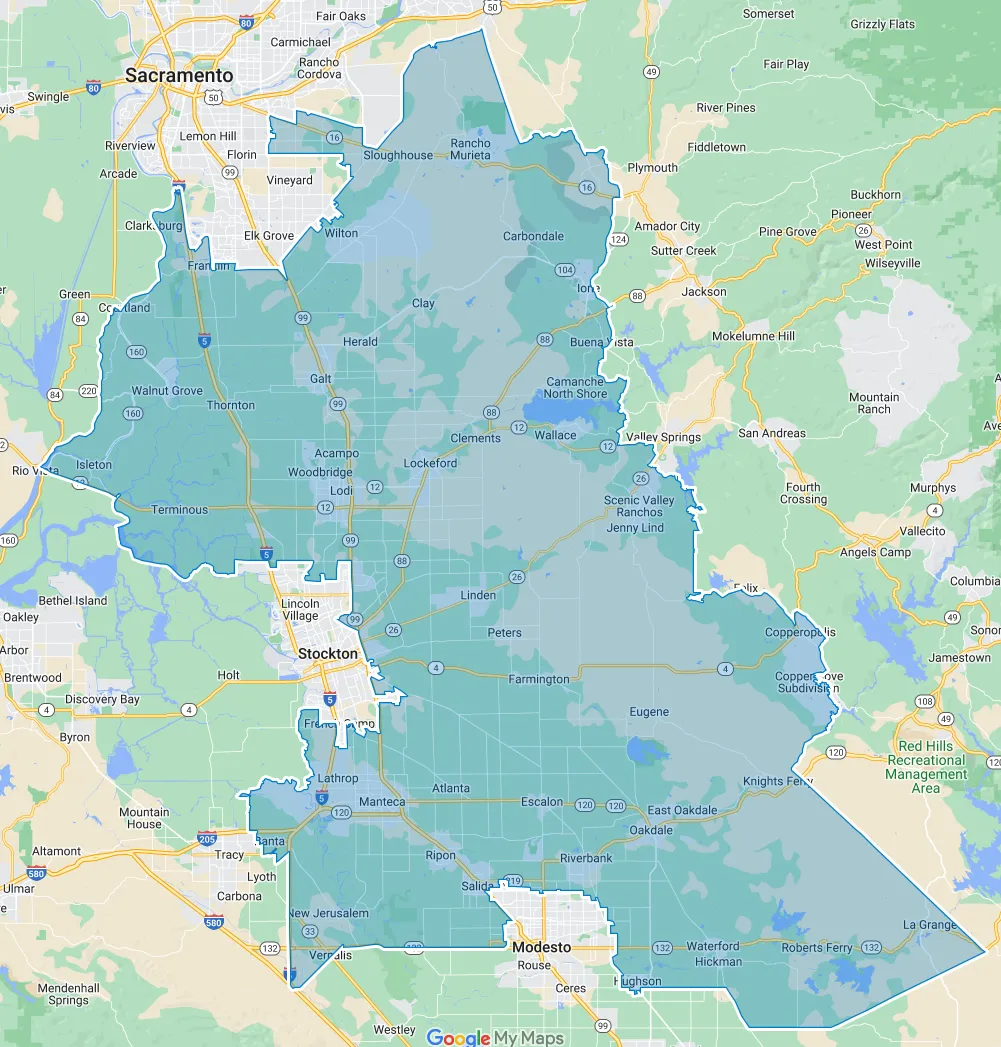
California’s 9th State Assembly District spans a diverse stretch of the Central Valley and surrounding communities - linking South Sacramento and its southern suburbs down through San Joaquin County and into Stanislaus County, with portions extending into the Sierra foothills.
District 9 includes parts of five counties: Sacramento, San Joaquin, Stanislaus, Amador, and Calaveras.
Communities & Character
District 9 is made up of a mix of:
Suburban neighborhoods and working communities in and around Sacramento’s southern area
Central Valley cities and unincorporated communities across San Joaquin County, including communities such as Lodi, Manteca, Lathrop, Ripon, Escalon, Lockeford, Woodbridge, and others
Regional economic centers, including Stockton, with the district continuing south into Stanislaus County
Foothill communities represented through parts of Amador and Calaveras Counties
A district that connects California’s backbone
From transportation corridors and logistics to agriculture, small business, and public safety, District 9 reflects the day-to-day reality of families who work hard, raise kids, and want government that’s accountable and practical.
Priority Topics in Assembly District 09
West Amador County: Wildfire Safety, Insurance, and Rural Infrastructure
In the Amador County portion of District 09, wildfire preparedness remains one of the most important issues facing local families and property owners. Amador County states that all land in the unincorporated county falls within Moderate, High, or Very High Fire Hazard Severity Zones, and county and fire-safe planning documents repeatedly emphasize the need for stronger evacuation planning, improved ingress and egress, and fuel-reduction work to protect communities. Amador Fire Safe Council materials show the county has been actively mapping evacuation routes and treating miles of roadway corridors to improve evacuation safety. At the same time, many residents continue to face the growing burden of fire insurance availability and cost, making homeownership and long-term stability more difficult in the foothills. Amador is also a rural county where infrastructure matters, and county actions to pursue broadband network and infrastructure projects show that reliable connectivity remains an important part of keeping rural communities livable, competitive, and safe.
West Calaveras County: Wildfire Readiness, Housing, and Rural Access
In the Calaveras County portion of District 09, public safety and quality of life are heavily shaped by wildfire risk, housing pressure, and rural infrastructure needs. Calaveras County emergency planning highlights that rural communities face hazards including wildfires, winter storms, and flooding, and the county’s hazard-mitigation and safety planning stress the importance of emergency access, evacuation routes, and resilient infrastructure. At the same time, housing availability and affordability continue to be major barriers. The county’s 2024–2029 regional economic strategy identifies a lack of housing availability, costly utilities and infrastructure development, and workforce challenges as core weaknesses, and it specifically notes Calaveras County’s work on multi-family housing in San Andreas. County broadband planning also shows that internet access remains a development priority, especially in rural communities where connectivity affects education, public safety, business growth, and telehealth. Recent community-needs assessments further point to limited transportation access and service capacity as persistent challenges for residents.
Elk Grove: Housing, Homelessness, Traffic, and Public Safety
In Elk Grove, residents are increasingly focused on the pressures that come with growth: housing affordability, homelessness, traffic congestion, and maintaining strong public safety. Housing remains an active issue, with state housing officials previously challenging city actions they said were inconsistent with state housing law, underscoring the ongoing tension between local growth decisions and the need for additional housing supply. Homelessness is also a major local concern. In February 2026, Elk Grove city leaders selected a Survey Road site for a planned permanent homeless shelter, following public debate over cost, location, and long-term strategy. Transportation and congestion remain part of the broader local picture as well, with regional planning bodies like SACOG continuing to frame housing, transportation, and connectivity as linked regional priorities that directly affect communities like Elk Grove. Together, these issues point to a city trying to balance quality of life, growth, and accountability while demanding practical results from government.
Galt and South Sacramento County: Highway 99 Safety and Traffic Relief
In Galt, transportation safety and congestion remain major concerns for families, commuters, and local businesses. Residents depend heavily on Highway 99 for daily travel, and the City’s own transit system includes a Highway 99 Express connection to Sacramento, showing how critical this corridor is to the region. At the same time, Caltrans has identified the Cosumnes River stretch of Highway 99 as a corridor needing safety and mobility improvements, including major bridge replacement work intended to improve traffic flow and long-term reliability. For local residents, that larger issue also includes concerns about ramp access, on-ramp safety, and the repeated slowdowns and backups near the Cosumnes River overpass.
Lodi: Homelessness, Accountability, and Real Solutions
In Lodi, one of the most visible community concerns is homelessness. The City of Lodi states that, based on the 2022 point-in-time count, 208 unsheltered individuals were living in the city, and it has pursued a service-first and accountability-based approach. Lodi has developed an Access Center and Emergency Shelter, opened a temporary shelter in 2022, and anticipates full development of the project in spring 2026. City planning documents also show Lodi has worked with the San Joaquin Continuum of Care, secured more than $1.25 million in HEAP funding for Harmony Homes, and received four rounds of HHAP funding to support local homelessness projects. At the state level, HHAP funding exists specifically to help cities, counties, and continuums of care prevent and end homelessness, but communities like Lodi still need stronger long-term support, accountability, and solutions that actually reduce homelessness instead of just managing it.
Rural East of Stockton: Water, Roads, Flood Protection, and Agricultural Stability
In the rural communities east of Stockton, families and landowners are focused on the basic issues that keep country living and agriculture viable: reliable water, flood protection, safe roads, broadband access, and protecting farmland from bad policy decisions. Water is one of the biggest long-term concerns. Eastern San Joaquin County agencies have stated that the area faces long-term groundwater overdraft, and the Farmington Program was created specifically to stabilize the Eastern San Joaquin County groundwater basin and reduce further decline and saltwater intrusion. At the same time, San Joaquin County continues to emphasize flood protection as an ongoing need for residents and property owners, with countywide flood-management programs and insurance-risk planning still playing a major role.
Transportation and infrastructure are also major concerns in East County. Regional transportation planning in San Joaquin County continues to focus on how people and goods move through the region, and separate broadband planning has identified Jack Tone Road and State Route 26 as strategic corridors for bringing fiber closer to rural communities in eastern San Joaquin County. That means many of these communities are still dealing with the same practical challenge: they need roads, internet access, and public infrastructure that match the needs of working families, farms, and small rural businesses. These areas do not need one-size-fits-all solutions from Sacramento — they need policies that respect agriculture, improve infrastructure, and preserve the ability to live and work in rural San Joaquin County.
Manteca: Housing, Homelessness, and Infrastructure
In Manteca, growth has made housing, homelessness, infrastructure, and public safety central local concerns. The City’s FY 2025–26 budget specifically says it is prioritizing infrastructure, public safety, housing, economic development, and financial sustainability. Manteca also has a dedicated Housing and Homeless Services function, and the city is moving from a temporary unsheltered emergency site to a permanent Navigation Center to address homelessness in a more stable and service-based way. San Joaquin County’s current regional planning also shows homelessness remains a major countywide issue, with the County, Stockton, and the Continuum of Care working under a coordinated homeless action plan.
Ripon: Managed Growth, Flood Protection, and Local Infrastructure
In Ripon, one of the clearest themes is managing growth without losing community character or falling behind on infrastructure and safety needs. The City’s General Plan page shows Ripon has adopted major land-use changes for new neighborhoods and housing, added very high-density and apartment-oriented sites to meet state housing requirements, updated its health and safety provisions to address 200-year flood protection, and amended its Growth Accommodation policies to allow up to 3% annual growth. That makes Ripon a strong example of a community balancing growth, housing pressure, and flood-related planning.
Escalon: Fiscal Stability, Public Safety, and Basic Infrastructure
In Escalon, the city’s own 2025–2026 Strategic Plan identifies four priorities: economic development, fiscal stability, public safety, and infrastructure. That aligns closely with what residents tend to care about in a growing small city: maintaining services, keeping neighborhoods safe, and making sure roads, sidewalks, water, and sewer systems keep pace. Escalon’s housing planning also states the city has adequate water, sewer, and utility infrastructure for its current RHNA planning, while city materials tied to Measure P emphasize maintaining and repairing streets, potholes, and sidewalks.
Riverbank: Housing Affordability, Safer Streets, and Transportation Connectivity
In Riverbank, the strongest supportable priorities are housing and transportation. The City’s Housing Element page shows Riverbank is still working through its 6th Cycle housing update, and HCD’s 2025 review letter says revisions were still needed for full compliance, which points to housing capacity and policy constraints as an active local issue. At the same time, Riverbank’s Active Transportation Plan is focused on making walking and biking safer and more practical, and the city’s Measure L and capital-improvement materials point directly to local streets, roads, traffic management, bike and pedestrian improvements, and broader infrastructure upgrades.
Waterford: Housing Supply, Flood Safety, and Water/Road Systems
In Waterford, the best-supported priorities are housing, flood safety, and core infrastructure. Waterford’s 6th Cycle Housing Element update lays out the city’s current regional housing obligation and ties future housing growth to infrastructure capacity. The city’s hazard-mitigation materials identify flooding tied to the Tuolumne River as a major concern and call for ongoing floodplain enforcement and stormwater planning. Waterford also has a current Local Road Safety Plan and recently sought proposals for a comprehensive water rate and fee study, which shows that transportation safety and long-term water-system sustainability remain active local issues.
Subscribe for Campaign Updates
ABOUT
THE LATEST
GET INVOLVED


Brandon Owen for State Assembly
1067 C Street, Ste 110 Galt CA 95632
(209)340-0465
© 2026 Brandon Owen for California Assembly District 09 - FPPC #1487846. All Rights Reserved.